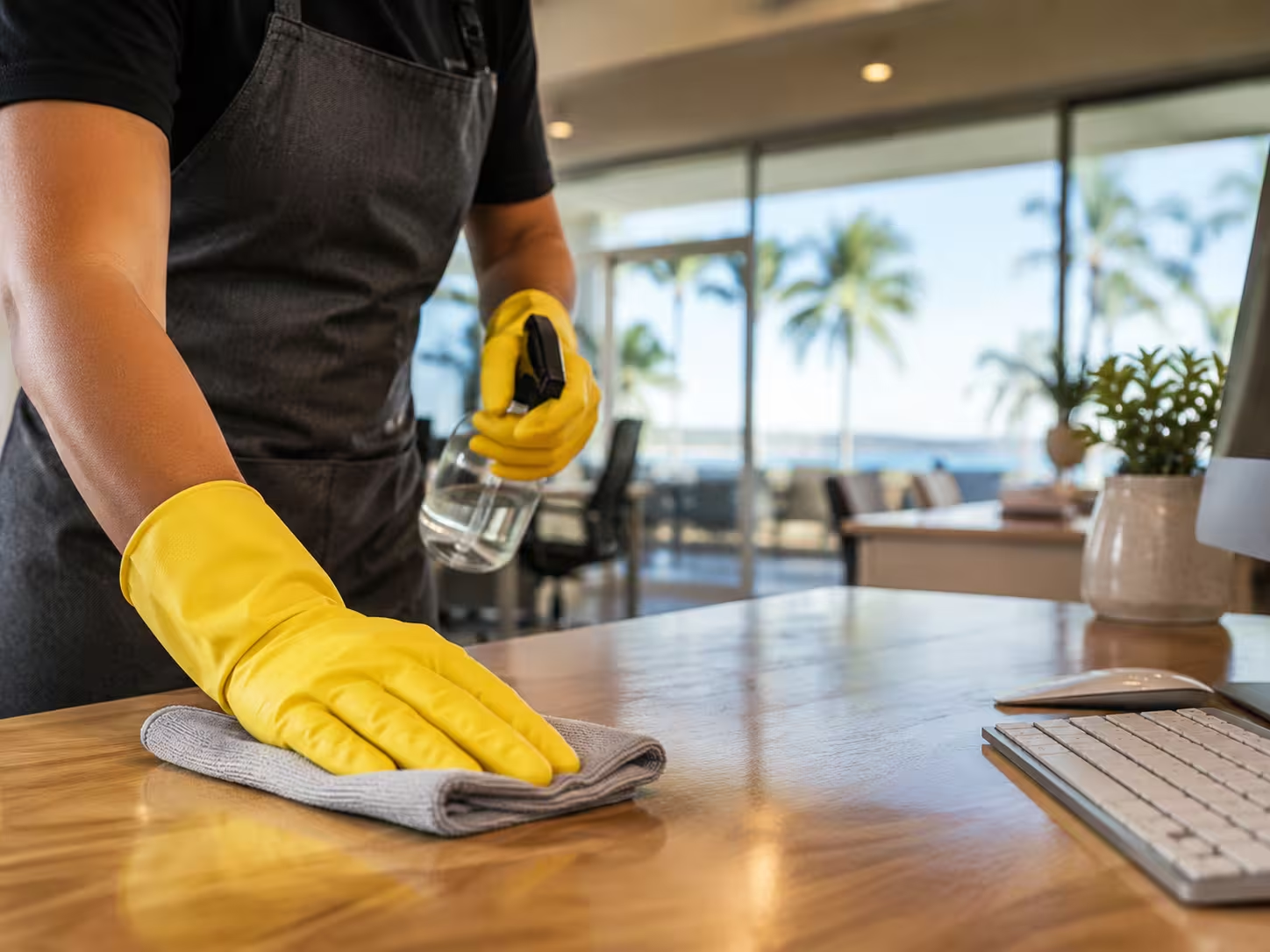
How Commercial Cleaning Saves Your Darwin Business Money
.jpg)
By Guy Adams, Owner at Squeeky Guy · Reviewed for Darwin commercial cleaning standards · Published 23 July 2026 · Last updated 23 July 2026
TL;DR — Professional commercial cleaning saves Darwin businesses money in ways that don't show on the invoice: fewer staff sick days, longer asset life, early detection of small maintenance issues, and time returned to staff. Over a year, the compounded savings typically outweigh what a business spends to keep its premises properly cleaned.
Most business owners file commercial cleaning under "expenses" — something to minimise, not invest in.
That thinking is worth challenging. Professional commercial cleaning protects assets, supports staff health, and helps avoid costs that are far more expensive to fix later than to prevent. Absenteeism alone costs Australian businesses an estimated $33 billion a year in lost productivity, according to data compiled from Safe Work Australia.
This article explains how commercial cleaning in Darwin helps businesses reduce operating costs, improve workplace standards, and protect long-term business value.
8 Ways Professional Cleaning Cuts Business Costs
Each of these adds up. None of them shows up as a line item labelled "cleaning," but all of them are affected by it. A University of Melbourne study found professional cleaning was associated with an 18% reduction in employee sick days, and Bond University reports the typical office desk carries around 400 times more bacteria than a toilet seat.
- Staff sick days — Regular sanitising of shared surfaces limits the spread of illness — Absenteeism, disrupted operations
- Productivity & morale — Staff feel more focused in a clean, well-kept space — Lower engagement, higher turnover risk
- Asset lifespan — Removes abrasive dirt and grime before it wears down surfaces — Premature replacement of carpets, flooring, furniture
- Maintenance issues — Prevents mould, bacteria, and grime build-up — Costly repairs, air quality problems
- Client impressions — A clean space signals professionalism — Lost trust, missed new business
- Compliance — Helps meet hygiene and safety standards — Non-compliance risk, potential penalties
- Supplies & equipment — Cleaners bring their own products and gear — Ongoing procurement, storage, and stock management costs
- Liability & risk — Trained, insured staff handle cleaning tasks safely — Workplace injury claims, uninsured incidents
The Hidden Cost of Managing Cleaning In-House
Many businesses don't realise how much in-house cleaning actually costs once every factor is accounted for.
- Supplies and equipment. Mops, vacuums, sprays, and disinfectants all need to be purchased, stored, and restocked. A commercial cleaning company brings its own products and equipment, which removes this ongoing procurement burden entirely.
- Staff time. When general staff are asked to handle cleaning tasks, it pulls them away from their actual role. The business ends up paying someone's regular wage to do a job outside their expertise, often to a lower standard than a trained cleaner would deliver.
- Liability. Untrained staff handling cleaning duties — particularly tasks involving chemicals, ladders, or heavy equipment — carries a genuine workplace safety risk. Professional commercial cleaners are trained and insured for this work, which reduces the business's exposure to injury claims.
- Missed early warning signs. Trained cleaning staff spend time in every corner of a facility. That regular exposure means they're often the first to notice a small leak, a blocked vent, or an early mould patch — well before it becomes a larger, more expensive repair.
How does commercial cleaning save Darwin businesses money day to day?
Local example — Squeeky Guy, Darwin. A Darwin office client switched from ad-hoc, staff-managed cleaning to a scheduled commercial plan. Within the first quarter, the biggest wins weren't the obvious ones: reception staff got roughly 30 minutes a day back that had been spent on kitchen and bathroom clean-ups, and a slow leak under a breakroom sink was spotted by the cleaning team before it reached the flooring — turning what could have been a full sub-floor repair into a quick plumbing fix.
Scheduled Cleaning vs Reactive Deep Cleans
Preventative, scheduled cleaning is generally more cost-effective than waiting until problems become visible. Regular cleaning helps maintain assets, reduce disruption, and avoid the higher costs often associated with reactive deep cleans.
A simple rule applies across most business assets: preventative maintenance is cheaper than reactive repair. The comparison below shows why.
- When it happens — On an agreed, ongoing schedule — Only once a problem is visible
- Disruption — Low, integrated into normal operations — High, often urgent and intensive
- Asset condition — Maintained consistently — Allowed to degrade between cleans
- Cost over time — Predictable, manageable — Higher, due to intensive remediation work
Reactive cleaning can look cheaper upfront. It usually isn't, once wear, downtime, and urgent labour are factored in. A stained carpet caught early might need a spot treatment; left for months, it may need full replacement. The same logic applies to hard flooring, upholstery, and even air conditioning systems affected by dust build-up over time.
Why does scheduled cleaning beat reactive cleaning?
Consistent commercial cleaning keeps a facility in steady condition. Reactive cleaning lets it decline between interventions, then requires a bigger, more expensive fix.
Three reasons scheduled cleaning tends to cost less over time:
- Smaller, regular tasks are faster to complete than large-scale remediation.
- Assets degrade slower when dirt and grime never get the chance to build up.
- Problems get caught early, before they become structural, compliance, or health issues.
Which Businesses Benefit Most?
Every business benefits from a clean workplace. Some industries carry a higher cost of neglect than others:
- Offices and corporate workspaces: shared desks, kitchens, and meeting rooms see constant use and need consistent upkeep.
- Medical and allied health facilities: strict hygiene standards make sanitising a compliance issue, not just a presentation one.
- Childcare centres: high-touch surfaces and young children mean illness spreads quickly without rigorous cleaning.
- Schools and educational facilities: heavy daily foot traffic across shared classrooms and common areas.
- Warehouses and industrial premises: dust and debris affect both equipment longevity and workplace safety.
- Retail stores: customer-facing spaces where presentation directly affects sales and trust.
- Strata and body corporate properties: shared common areas that reflect on every tenant or owner in the building.
The full breakdown of industries that rely on commercial cleaning Darwin providers deliver shows just how differently these needs can vary, from compliance-heavy healthcare standards to the daily wear of a busy retail floor.
One Size Doesn't Fit All
A medical centre, a warehouse, and a small office all carry different risks. That means each needs a different cleaning approach. This is exactly why office cleaning Darwin businesses use looks nothing like the plan suited to a childcare centre or a strata property.
A reputable commercial cleaning company will assess a business's specific risks, foot traffic, and compliance needs, then build a tailored schedule around them. Generic packages tend to under-service some areas and over-service others, which is why good business cleaning services are built around the premises, not the other way around.
Professional Commercial Cleaning FAQs
Does professional commercial cleaning actually reduce long-term business costs?
Yes. Regular cleaning helps protect assets, reduce workplace disruptions, and identify minor issues before they become expensive repairs or replacements.
Is professional commercial cleaning worth it for a small business?
Yes. Small businesses can save staff time, maintain a healthier workplace, and avoid managing cleaning supplies by outsourcing to a professional cleaning provider with a schedule that suits their needs.
How do I choose the right commercial cleaning company?
Look for a provider with industry experience, appropriate insurance, trained staff, and quality control processes. A tailored cleaning plan is usually a better indicator of value than the lowest price alone.
What's the difference between office cleaning and business cleaning services?
Office cleaning focuses on workspaces, kitchens, and shared areas, while business cleaning services can include specialised cleaning for medical centres, childcare facilities, warehouses, retail stores, and other commercial environments.
Can commercial cleaners help prevent costly maintenance issues?
Yes. Regular inspections during routine cleaning can identify early signs of mould, leaks, excessive dust, or surface wear before they develop into more expensive maintenance problems.
Why Commercial Cleaning Is a Long-Term Business Investment
Viewed narrowly, commercial cleaning looks like a cost. Viewed properly, it's preventative maintenance — protecting assets, people, and reputation.
For Darwin businesses aiming to reduce long-term operating costs, treating workplace cleaning as part of the broader business strategy — not a short-term expense — is the practical starting point. Exploring the full range of commercial cleaning services Darwin businesses have access to, and discussing a tailored schedule with an experienced provider like Squeeky Guy, is a sensible next step.